
Art Spiegelman, the Pulitzer Prize-winning creator of Maus, has used generative AI on a published piece of art for the first time, and the reaction from fellow cartoonists has been swift. Spiegelman disclosed it in an interview with Publishers Weekly about Pantheon’s new 25th anniversary edition of In the Shadow of No Towers, his comics response to the Sept. 11 attacks.
The new edition, released in September, is physically smaller than the oversized 2004 original. It also comes with what PW calls an anniversary present of sorts: a cover sticker that ironically shows the burning Twin Towers as candles on a birthday cake. That sticker is where the AI came in.
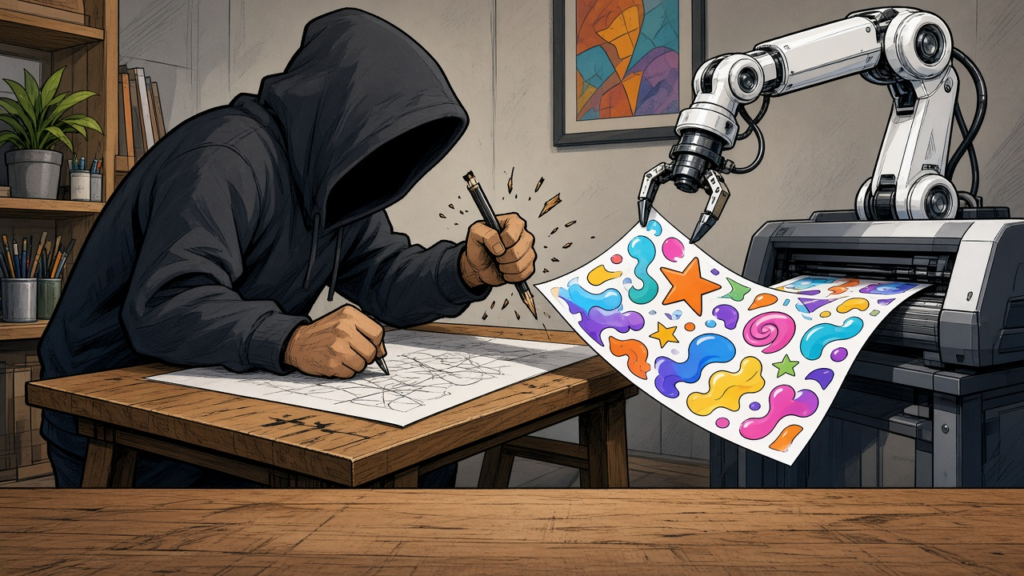
“I wanted it to look like an old engraving, and I was lazy,” Spiegelman told PW. “I said, let’s do it with AI and see what happens.” His wife, New Yorker art editor Françoise Mouly, helped with the prompts. “She’s good at Claude whispering,” Spiegelman said.
Once the quotes spread, the criticism followed. As Comics Beat reports, Evan Dorkin answered with a cartoon titled Slop Bucket Kids, a jab at Spiegelman’s Garbage Pail Kids, showing him throwing up into a bin labeled “Pulitzer prompts.” Chris Burnham posted a parody cover called In the Shadow of Poo Towers. Bleeding Cool collected more responses, including Polar creator Victor Santos, who called it “extremely sad on too many levels,” and comics writer Brian Cronin, who wrote that “I was too lazy” is not an excuse.
Some of the concern goes beyond the sticker itself. Critics pointed to Mouly’s role at The New Yorker, worrying that two of the most influential figures in comics and illustration treating AI casually could shape how other publications handle it.
The irony is that Spiegelman had been skeptical before. In an earlier public talk, he said he tried an early version of DALL-E and was “disappointed in what I saw,” and he defined art as something that “gives shape to one’s thoughts and feelings,” something he said AI could not do. The comics themselves are unchanged; the AI image is limited to the sticker.
The debate over AI-made art has been running across comics and games this year, from creators publicly owning up to it to projects like Future? No Thanks!, which dropped its AI voices and offered refunds.