

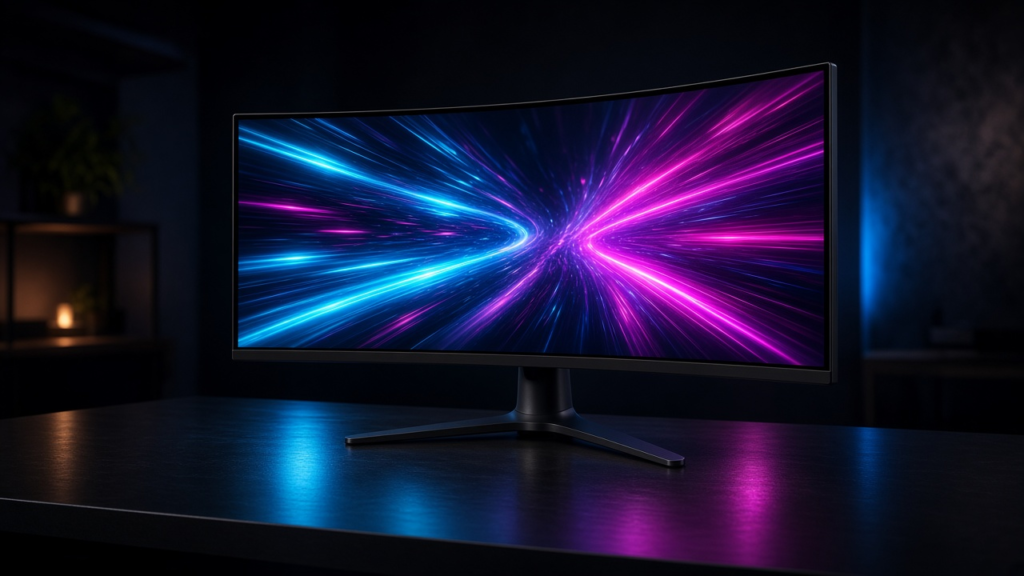
The fastest gaming monitor you can buy is almost here. Samsung says its 27-inch Odyssey G6 (model G60H), which it calls the world’s first gaming monitor to support a refresh rate of up to 1,100Hz, will roll out to U.S. retailers starting in December for $899.99.
There is a catch in the headline number. The Odyssey G6 only reaches 1,100Hz in HD, meaning 1080p. Switch to QHD, or 2,560 by 1,440, and it tops out at 600Hz instead, which is still far beyond what most players’ graphics cards can feed in modern games. Samsung calls the ability to swap between the two Dual Mode. Its IPS panel is rated for a 1ms gray-to-gray response time, and it narrowly edges out LG’s UltraGear 25G590B, which reaches 1,000Hz, The Verge notes.
The monitor is also the first to use what Samsung calls Odyssey Clear Motion, an algorithm meant to reduce motion blur during fast action, which the company plans to bring to more models later. It supports HDR10+ Gaming, Nvidia G-Sync compatibility and AMD FreeSync Premium, though Samsung’s fine print says FreeSync Premium does not support the full 1,100Hz and AMD’s Radeon RX 6000 series and older cards cannot drive 1,000Hz or more. macOS users get neither Dual Mode nor the 600Hz QHD maximum.
Connections include one DisplayPort 2.1 port and two HDMI 2.1 ports, and the stand adjusts for height, tilt, swivel and pivot. “With the Odyssey G6, we are bringing together an ultra-high refresh rate and enhanced motion clarity, while enabling gamers to toggle between display modes depending on their gaming preferences,” said Hun Lee, executive vice president of Samsung’s visual display business.
Whether anyone can see the difference between 600Hz and 1,100Hz is up for debate, and the monitor mostly makes sense for competitive players chasing every frame in esports shooters. Samsung first teased the G6 in December 2025 and bumped its specs again in August, so it has been a long road to shelves. Anyone building a PC around it will also want a graphics driver that behaves. Nvidia owners are still waiting on a full fix for the driver bug hammering SSDs.