
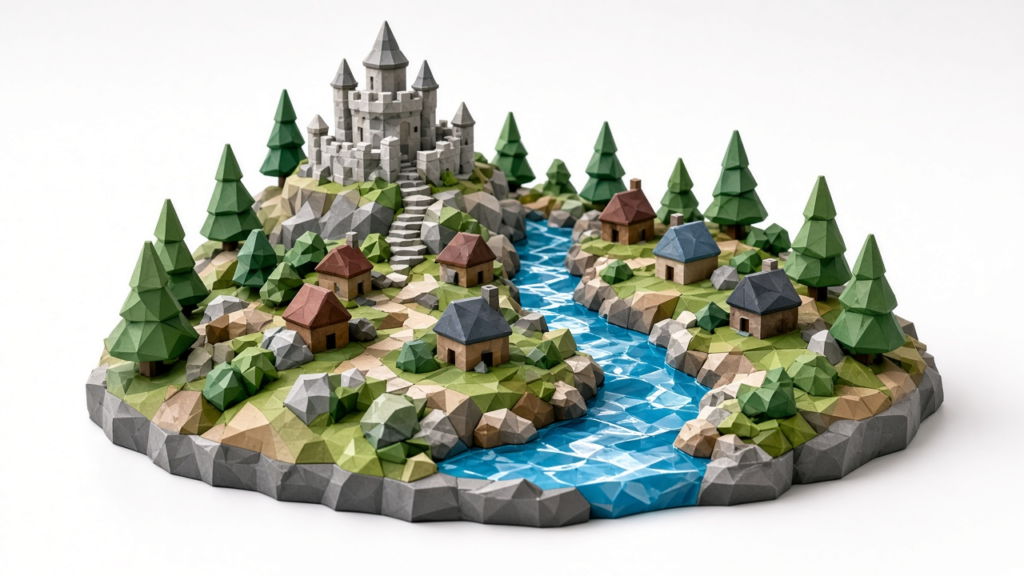
Unity has bought one of the best-known names on its own Asset Store. The company announced on Monday that it has acquired Synty Studios, the New Zealand studio behind the POLYGON range of stylized low-poly 3D art packs, and that Synty’s library will be built into Unity Spark, Unity’s upcoming AI-native game creation platform.
Synty started in 2014, when its two founders made a single asset pack over a weekend and put it up on the Unity Asset Store. It has since grown into a library of more than 70,000 assets used by everyone from first-time hobbyists to professional studios. Unity says most of the artists who made the packs are joining the company full time and will keep making new ones.
Spark is the reason for the deal. Unity describes it as a platform that lets anyone with an idea for a game make it, and it connects directly to the Asset Store. Synty’s existing library, and new content from its artists, will be available in Spark starting with a closed beta later this year.
“Our goal has always been to create fun, high-quality art that helps people make great games faster,” Synty co-founder Mike Clephane said, as quoted by GamesIndustry.biz. “Joining Unity will allow our artists to continue building the detailed worlds, characters, and assets our community creates with today, while reaching a new generation of creators through Unity Spark.”
For current customers, Unity is stressing that very little changes. Packs, licenses and workflows stay as they are, free Synty assets stay free, and the Synty Store and Synty Pass subscription keep running. Synty’s packs will also stay available for Unreal Engine and Godot, and Unity says it will give plenty of notice before any future change to engine support. It has no plans to change Synty’s pricing at this time. Financial terms were not disclosed.
The deal was announced at Unite Tokyo, a day after Unity launched a $50,000 grant program for indie studios. It also comes during a strong stretch for the company, which recently posted what it called its strongest-ever third quarter.