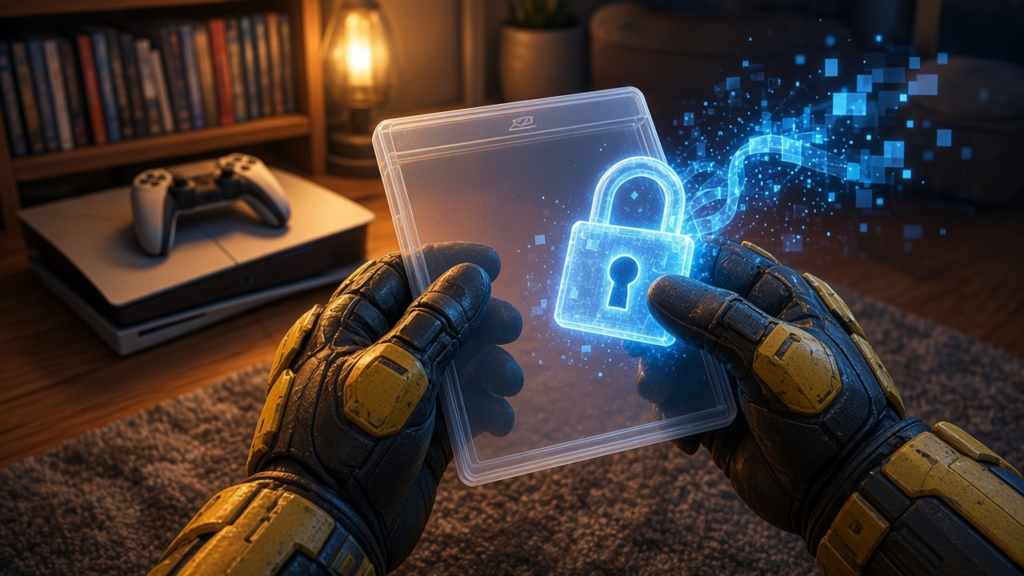
U.S. Representative Ritchie Torres (D-NY) has announced that he plans to introduce the Power To The Players Act, proposed legislation meant to make buying a video game mean owning it. The bill has not been filed yet, and no bill text has been made public, so for now the only description of what it would do comes from the announcement on his House website, posted Oct 15.
According to that announcement, the planned bill would direct the Federal Trade Commission to write regulations protecting players’ ability to own and play the games they buy. Torres’s office says buying a game under the proposal would give the consumer ownership rather than a license to play it, and that games with online functionality would have to offer an offline mode before their servers are shut down. The release also says the bill would preserve players’ ability to own and resell their games.
“When you pay for a game, you should own it,” Torres said in the release. “Consumers must have the right to own, the right to play, and the right to transfer the games they buy. A game that can be taken away the moment a company pulls the plug is not a purchase. It is a rental disguised as a sale.”
NBA 2K25 as the example
The announcement points to NBA 2K25 as the kind of case it wants to prevent. Torres’s office says the game sold for $69.99 for the standard edition and $99.99 for the All-Star Edition, will be delisted from digital storefronts on Oct 30, and will have its online servers shut down on Dec 31, about two years after release. “No consumer should have a game they paid for pulled out from under them on a company’s arbitrary timeline,” the release says.
Torres also told Kotaku, as quoted by Ars Technica, “I think there should be a simple rule: if you pay for it, you own it,” and called the change a “restoration to the historical norm.”
A long road from announcement to law
Ars Technica notes that because the full text isn’t public, it isn’t yet possible to judge how effective or enforceable the proposal would be, and that most proposed legislation never reaches a vote. Ars also flags a possible technical hurdle: some online games may be engineered in ways that make an offline mode hard to add, which could push developers toward very different designs.
Ars places the announcement within a wider push on game ownership and preservation, citing activist and lobbying efforts such as Stop Killing Games, and notes that bills proposed in different countries have suggested different fixes. Consumer regulators have been circling game purchases elsewhere too, as with the EU consumer protection network’s probe of in-game virtual currencies.