
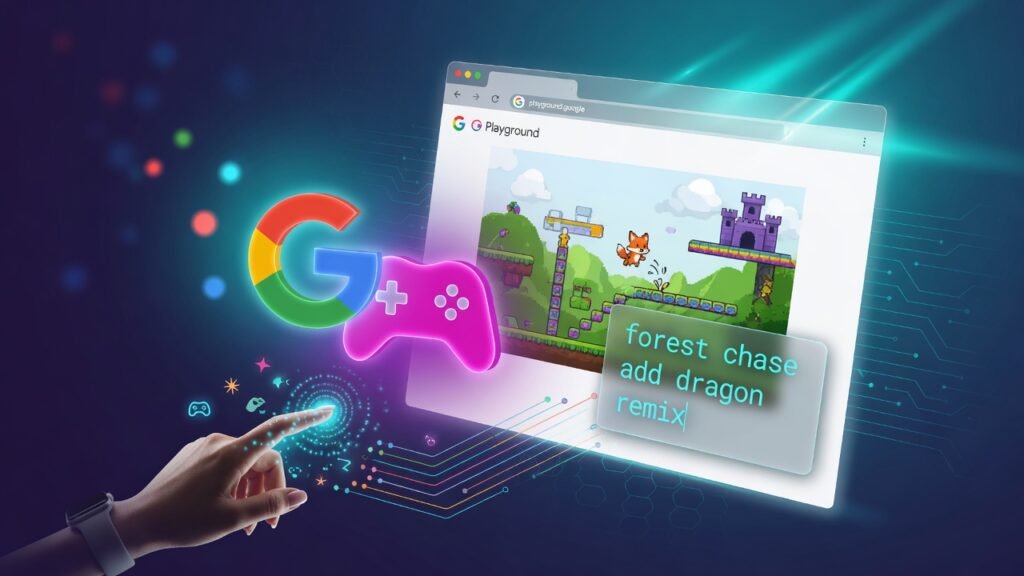
Google wants anyone to be able to make a video game by describing it. On Wednesday, October 7, the company introduced Playground, an experimental, browser-based platform for creating, playing, and sharing games built from text prompts, with no coding required, according to a Google blog post.
Creators type what they want, start from a blank canvas, or remix starter prompts, then test the result right away. Google says you can keep asking for changes, from tweaking physics and rewriting rules to customizing characters or overhauling the environment. Finished games can stay private, be shared with a link, or be published to a community gallery called Explore, which surfaces games based on player ratings and play activity. Some genres support multiplayer and in-game leaderboards, and players can set up a Play Games profile to follow creators.
Google says every published game goes through safety screening under its community guidelines, and players can report games. Playground launches today for users in the U.S. who are 18 or older, at playground.google, with creation access rolling out in tiers based on Google One membership.
The bigger name attached is Unity. Google says Playground will soon integrate Unity Spark, a prompt-based tool that it says unlocks professional-level mechanics, high-fidelity 3D, and the Unity runtime for creators who want to go further. Unity Spark is still in testing, with a closed beta coming soon.
Unity CEO Matthew Bromberg tried to get ahead of skeptics. “This isn’t about ‘one-shotting,'” he wrote in a blog post quoted by Game Developer. Getting AI to spit out a copy of an existing game, he argued, “does not make you the next Hideo Kojima, any more than re-typing the first paragraph of War and Peace in your word processor makes you Tolstoy.” He said Spark is about making “real, unique interactive experiences” that are worth polishing and sharing.
The launch lands at a tense moment for AI in games. Players and developers have pushed back hard on generative AI this year, from pulled trailers to studio leaders warning against replacing developers. Publishers are still exploring it, though, as RCG reported when Ubisoft filed Motherbrain trademarks for AI game-making software.